Artist: Wlastimil Hofman
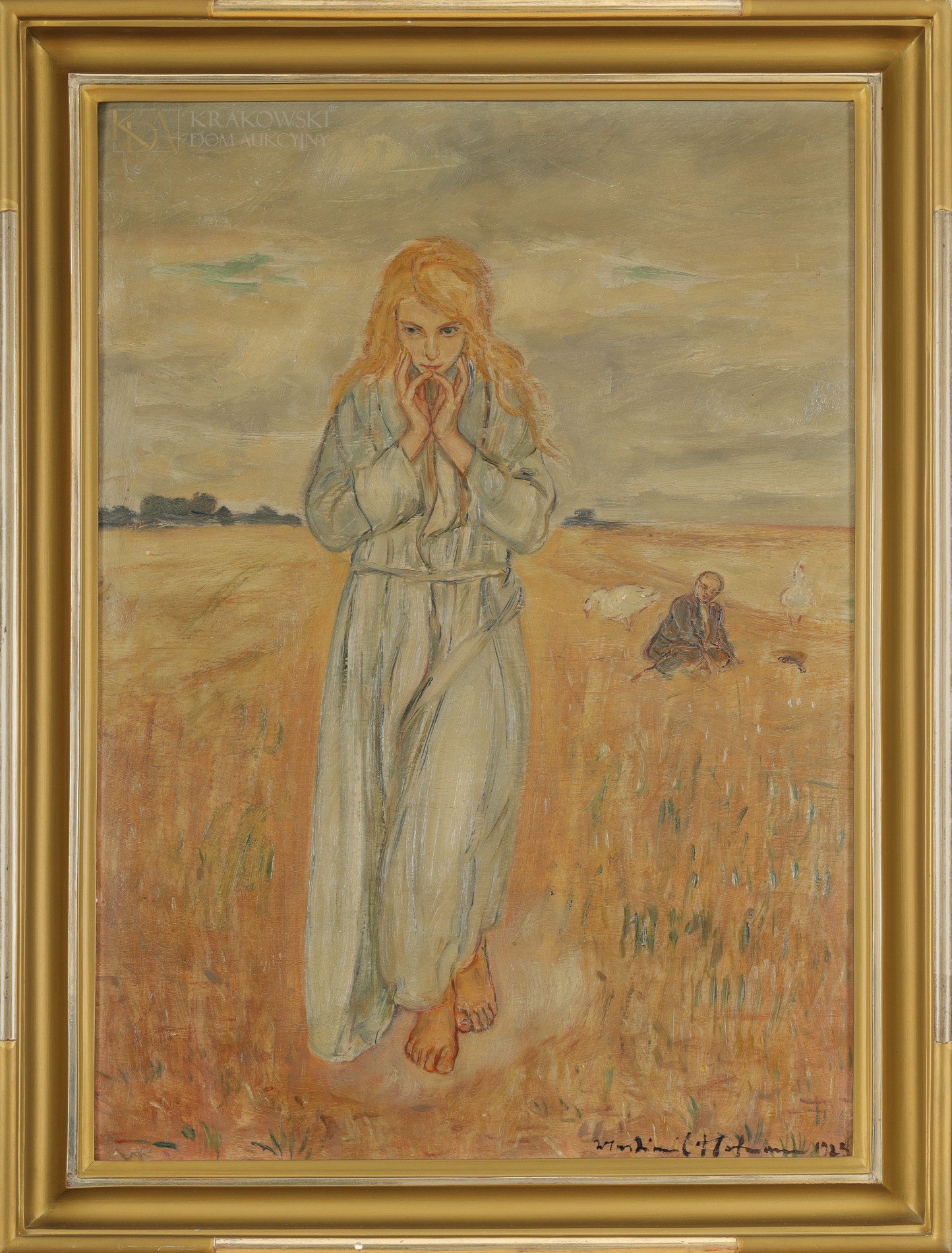
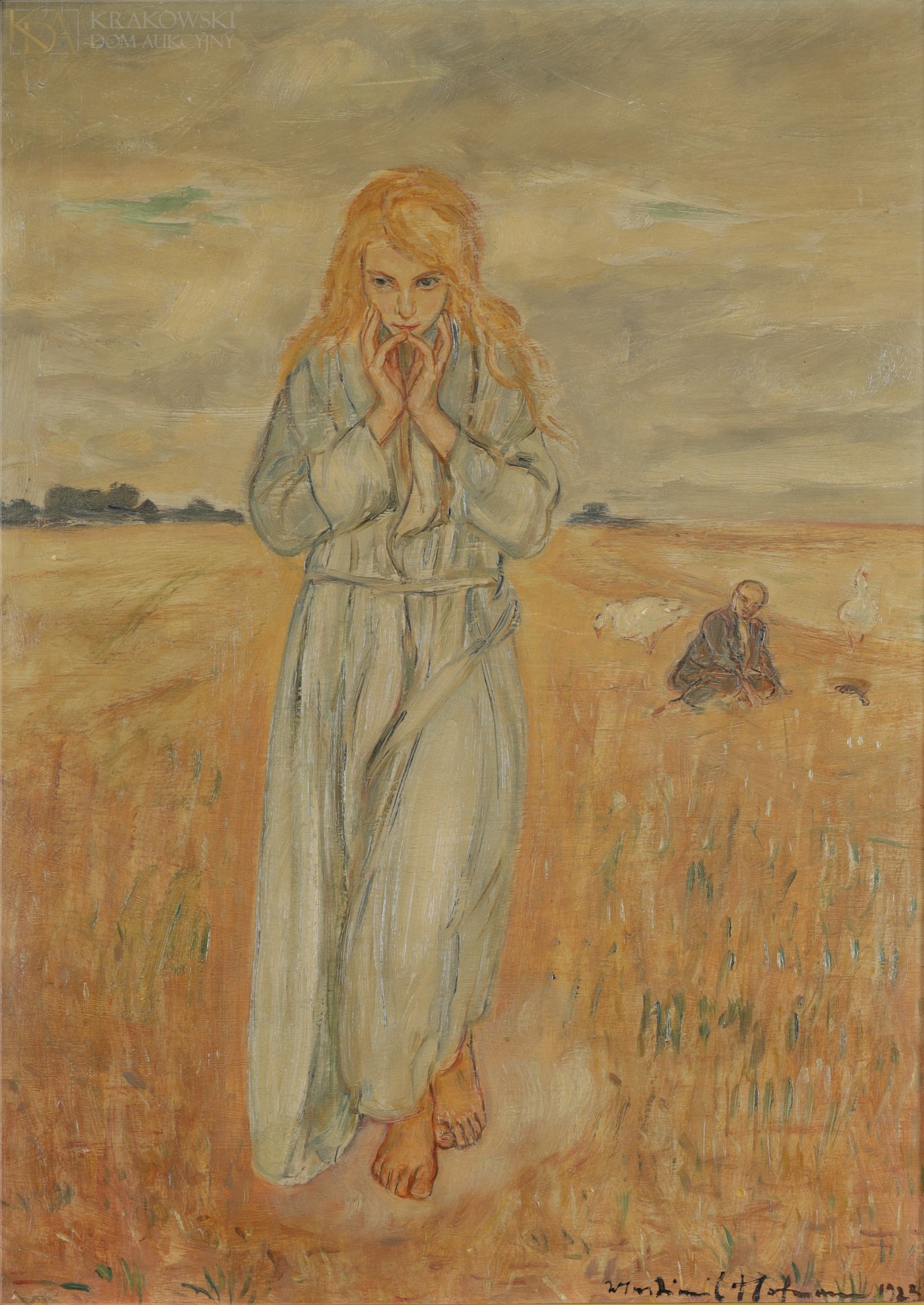
Title: Slavic Legend (1923)
Medium: oil on cardboard
Dimensions: 67 x 48 cm
Dimensions with frame: 76.5 x 57.5 cm
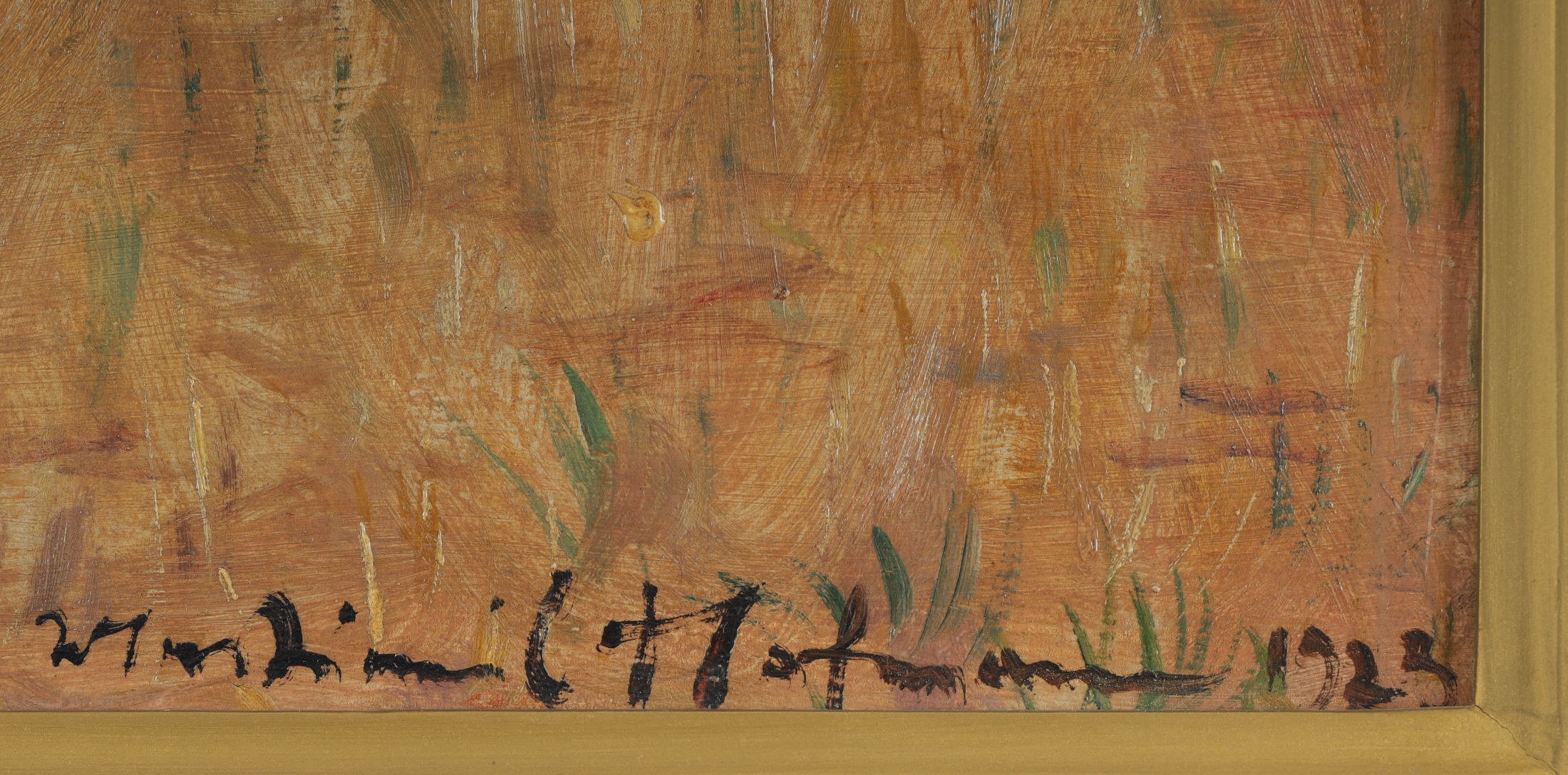
Signed and dated lower left: "Wlastimil Hofman 1923"
Visible soiling on the painting.
Description of the work:
Wlastimil Hofman’s work from the 1920s is full of symbolic references, among which vanitas motifs hold a special place. However, the reflection on transience and the inevitability of death does not take on a brutal dimension in his works, but rather constitutes a form of melancholic and quiet contemplation on the impermanence of human life. In Wlastimil Hofman’s allegorical depictions, alongside fauns and nymphs, there are direct references to the transience of life. The artist’s reflection on transience is embodied, for example, by children lost in thought over a dead bird or by the realistic, even veristic, depictions of elderly figures.
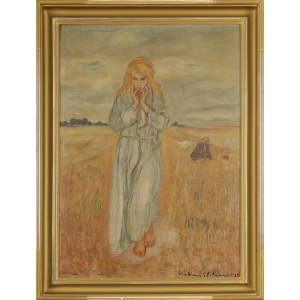
The painting on display, titled “Slavic Legend” and painted in 1923, depicts a young, blonde-haired woman walking across a vast summer field. Her light-colored, long robe envelops her silhouette, and her wind-tossed, disheveled hair emphasizes the figure’s dynamism. The woman depicted almost blends into the sunlit landscape. Her bare feet emphasize her direct connection to the earth. As she walks toward the viewer, she leaves the goose herder standing alone in the field. Her slightly bent posture and hands held close to her face lend her a disturbing air, bringing to mind traditional Slavic beliefs about the Południca, also known as Żytniczka or Rżana Baba. These terms, highlighting the mythical figure’s connection to harvest time and rye fields, were used as a menacing warning, directed mainly at children working in the fields, who were particularly vulnerable to overheating and heatstroke. Południca was both a part of the natural world and a threat associated with it—she personified the dangers lurking for people working in the fields during the hottest part of the day.
The lack of literalism in Wlastimil Hofman’s painting invites speculation about the meaning hidden behind the depiction. His heroine appears to be a rather mysterious, almost ghostly figure who straddles the boundary between the earthly and the surreal. Her delicacy contrasts with an aura of unease; the tranquil landscape stretching behind her conceals a sense of something unpredictable. The depicted scene can therefore be interpreted not only as a representation of a folk tale but also as a poetic reflection on the relationship between humans and nature, the passing of summer, and the rhythm of rural life.
Wlastimil Hofman’s biography is available on the Krakow Auction House website [SEE]
If you would like to sell paintings by Wlastimil Hofman, please contact us [LINK]